
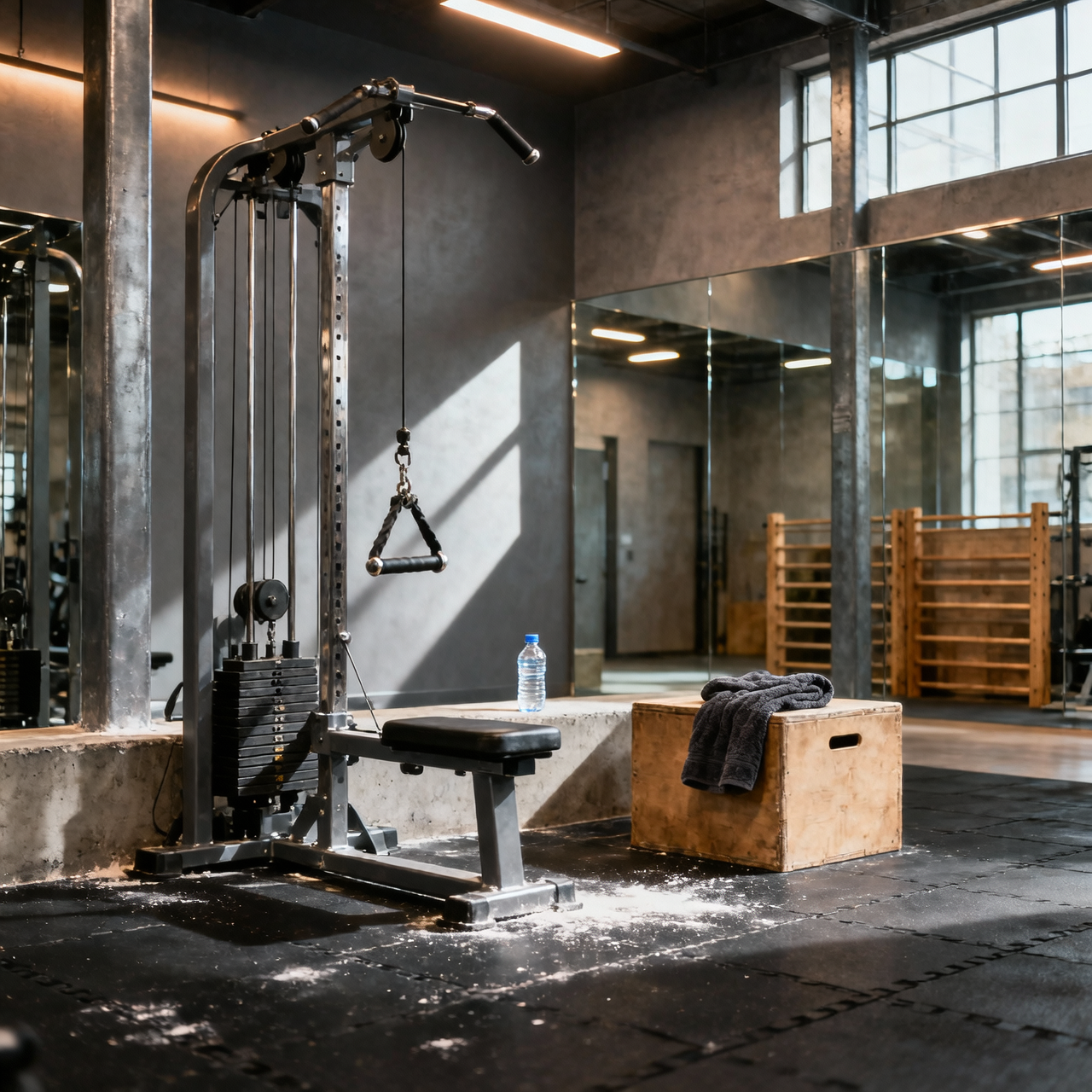
Cable Row
cable-row
I love the steady, controlled tension of a cable row. When dialed in, each rep feels like a smooth squeeze across your upper back. You’ll feel your shoulder blades glide together, your chest open, and a satisfying burn build in your lats. Keep your torso still, brace your core, and let the cable’s constant resistance guide you through a clean, powerful horizontal pull that leaves your back feeling engaged and strong.
If you're new to this
Start light. Your goal is to teach your nervous system the movement pattern, not to test your maximum strength. Focus on keeping your hips and spine completely rigid; if you find yourself rocking back and forth, drop the weight until your core can stabilize the motion. When you pull, imagine trying to tuck your elbows into your back pockets rather than yanking with your hands. You will know you are hitting the right muscles when your biceps and forearms feel like mere connectors while your upper back does the heavy lifting. Stop the set the moment your form breaks down or your lower back begins to arch under tension. Failure in this movement should feel like a muscular burn in the lats and rhomboids, not joint strain or spinal compression. Breathe consistently, reset between reps, and trust that controlled, lighter repetitions will build the strength foundation you need for heavier loads.
Common mistakes
Most lifters sabotage the cable row by using momentum instead of muscle, leaning far back to haul the weight in and turning the exercise into a hybrid deadlift. Others over-retract their shoulders, pinching them together so aggressively that the movement becomes a neck and trap strain rather than a lat and mid-back builder. A frequent technical breakdown is allowing the wrists to bend or the elbows to flare wide, which shifts the load entirely into the biceps and anterior shoulder. Finally, many rush the eccentric phase, letting the stack crash forward instead of controlling the return. Slow the tempo, anchor your torso, and let the back drive the motion.
Routine
- Sets
- 3
- Reps
- 8-12
- Rest
- 90s
- Tempo
- 2-0-2-0
- Frequency
- 2-3x/week
Increase the load by 2.5-5 lbs once you can complete all three sets at 12 reps with controlled form.
Muscles
- Lats
- Upper back
- Biceps
- Forearms
- Abs
Equipment
- Cable machine
- 1
Attach a V-handle to the low cable pulley.
- 2
Sit on the bench and plant feet flat against the footplates.
- 3
Reach forward and grasp the handle with palms facing each other.
- 4
Sit upright, retract the shoulder blades, and brace the abdominal muscles.
- 5
Exhale while pulling the handle straight toward the lower ribs.
- 6
Drive the elbows back, squeeze the mid-back muscles, and pause for one second.
- 7
Inhale while slowly straightening the arms to return the handle to the starting position.
- 8
Release the handle and step off the platform to complete the set.