
Couch Stretch
couch-stretch
When I settle into this stretch, I feel a deep, steady pull across the front of my hip and down into my quad. It’s not about forcing the position; it’s about letting gravity and steady breathing melt away years of sitting. A good rep leaves my pelvis feeling grounded, my spine tall, and my lower body quietly humming with renewed space. I breathe through the tightness until it softens into something open and resilient.
If you're new to this
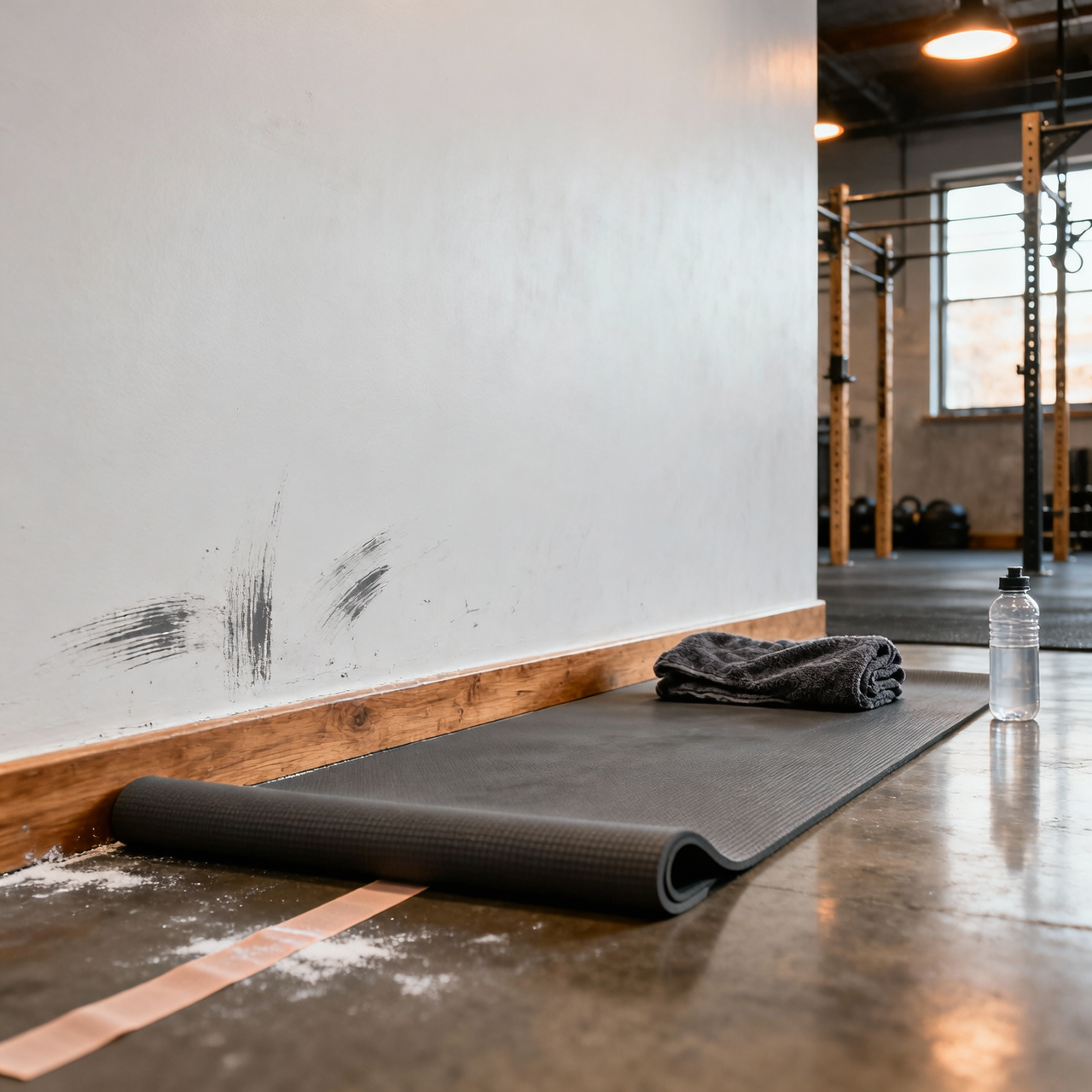
Start by placing a folded towel or cushion under your back knee to protect the joint from direct pressure. If the full vertical shin placement feels too intense, begin with your knee slightly further from the wall or keep your front foot closer to your body. Focus on gently tucking your pelvis under as if trying to point your tailbone toward the floor, which isolates the stretch away from your lumbar spine. You will know you are approaching your limit when breathing becomes shallow or when you feel a sharp, localized pinch in the knee joint rather than a broad muscular pull. Stop immediately if joint pain occurs, and ease back by shifting your weight forward. Beginners often compensate by leaning too far forward or arching the lower back to fake depth. Prioritize a tall, upright torso and let the stretch build gradually. Consistency matters far more than aggressive positioning, so hold a comfortable range for shorter intervals and slowly progress as your tissues adapt.
Common mistakes
Practitioners frequently allow the lower back to hyperextend, which shifts the tension away from the target tissues and places unnecessary compressive load on the lumbar spine. Another widespread error involves letting the front foot drift too far forward or too far back, disrupting knee alignment and destabilizing the pelvis. Many also forget to actively contract the glute of the rear leg, which leaves the hip flexor partially relaxed and reduces the effectiveness of the stretch entirely. Finally, holding the breath or bouncing into the position triggers a protective stretch reflex, causing the muscles to tighten rather than yield. Maintaining a neutral spine, precise foot placement, steady glute engagement, and controlled respiration will eliminate these compensations and ensure safe, productive mobility work.
Routine
- Sets
- 3
- Reps
- 3-4 holds of 20-30s per side
- Rest
- 30s
- Frequency
- 5-6x/week
Increase hold duration by 10 seconds or gently lean forward to deepen the hip flexor stretch.
Muscles
- Hip flexors
- Quadriceps
- Glutes
Equipment
- Bodyweight
- 1
Kneel on a cushioned mat facing away from a sturdy wall.
- 2
Place the top of one foot flat against the wall with the shin vertical.
- 3
Step the opposite foot forward and plant it firmly to create a 90-degree front knee.
- 4
Inhale to lengthen the spine and gently tuck the tailbone under.
- 5
Exhale to squeeze the back glute and brace the core.
- 6
Inhale to maintain an upright torso, then exhale to shift the hips forward slightly.
- 7
Hold the stretch for 20 to 30 seconds while taking slow, controlled breaths.
- 8
Inhale to slowly pull the front foot back toward the kneeling position.
- 9
Exhale to carefully lower the back foot to the floor.
- 10
Switch legs and repeat the sequence.