
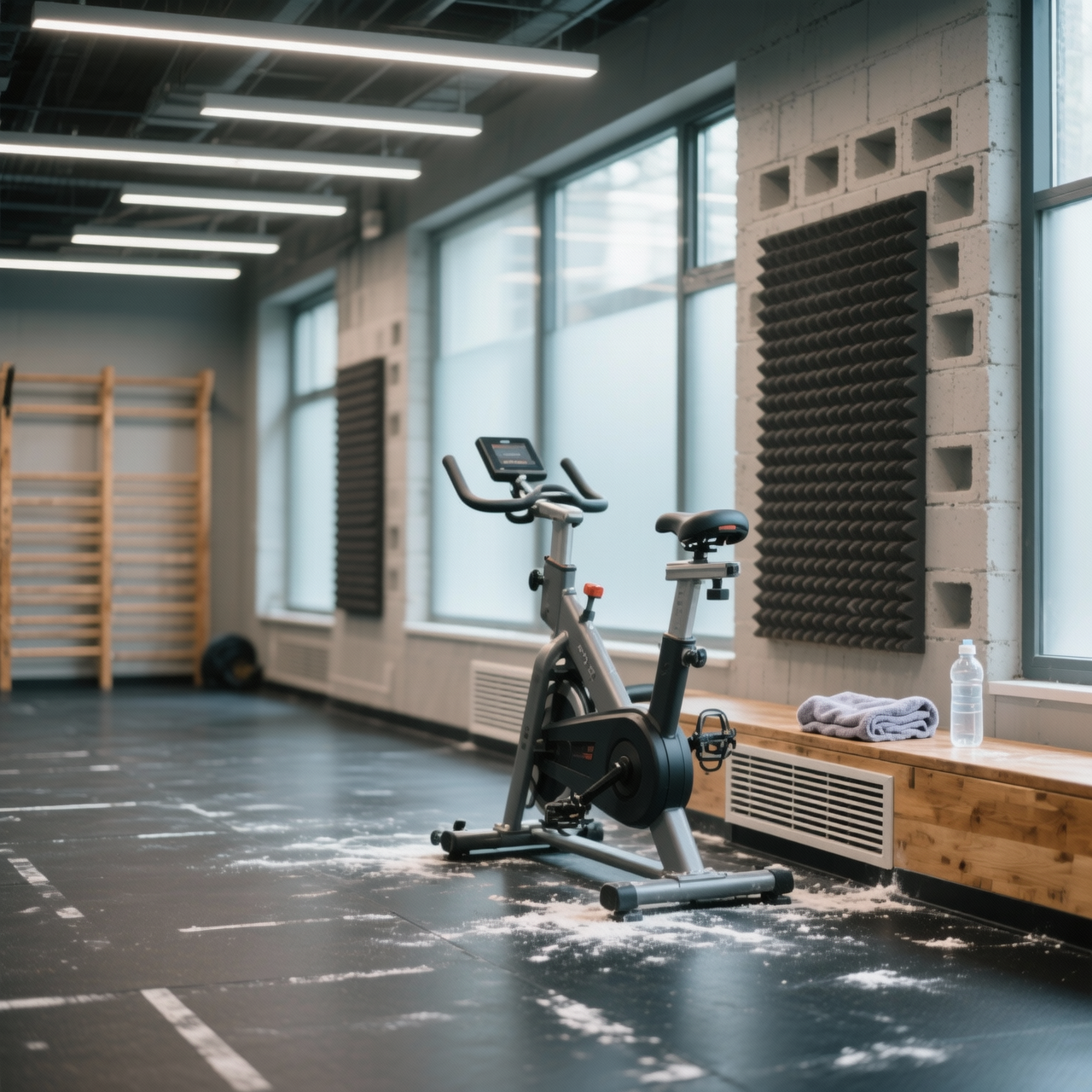
Cycling
cycling
When I settle into the saddle and find my cadence, cycling transforms into a smooth, rhythmic flow. Each pedal stroke should feel like a continuous circle, not a choppy push. I notice my breathing syncing with the rotation, my legs burning in a steady, manageable way rather than sharp fatigue. The bike becomes an extension of my body, carrying me forward with effortless momentum while my heart pumps a strong, steady beat.
If you're new to this
Start with a light resistance that allows you to spin comfortably at a steady pace for your first few sessions. Pay close attention to your saddle height; if your hips rock side to side while pedaling, lower the seat slightly until your pelvis remains stable. Beginners often compensate by shrugging their shoulders or gripping the handlebars too tightly, which drains energy and creates unnecessary neck tension. Keep your hands light and your gaze forward. You will know you are pushing too hard when your breathing becomes ragged, your cadence drops significantly, or your knees begin to ache. Stop immediately if you feel sharp joint pain or dizziness. It is completely normal for your thighs to feel warm and tired as your muscles adapt to the repetitive motion, but that fatigue should never compromise your smooth pedal circle. Focus on consistency over intensity in the beginning, and gradually increase your duration before adding resistance. Trust the process, listen to your body, and celebrate every steady minute you complete on the saddle.
Common mistakes
Most riders sabotage their efficiency by setting the saddle too low, which forces the knees into excessive flexion and creates unnecessary strain on the patellar tendons. Another frequent error is mashing heavy gears at a slow cadence, which shifts the workload entirely onto the quadriceps and quickly leads to muscular failure rather than sustainable aerobic conditioning. Many also forget to engage their core, allowing their torso to sway excessively with each pedal stroke and wasting valuable energy. Finally, gripping the handlebars like a vice transfers tension straight into the shoulders and upper back, turning a fluid cardiovascular session into an uncomfortable endurance test.
Routine
- Sets
- 1
- Reps
- 20-45 minutes
- Rest
- 0s
- Frequency
- 3-5x/week
Increase session duration by 5-10% weekly or add resistance/incline to maintain target heart rate.
Muscles
- Quadriceps
- Glutes
- Cardiovascular
- Hamstrings
- Calves
- Hip flexors
- Abs
Equipment
- Exercise bike
- 1
Adjust the saddle height until your knee maintains a slight bend at the lowest pedal position.
- 2
Set the handlebar reach so your elbows stay slightly bent and your back remains comfortably straight.
- 3
Secure your feet to the pedals using straps or cleats, aligning the ball of each foot with the pedal axle.
- 4
Sit centered on the saddle with shoulders relaxed, hands resting lightly on the grips, and spine neutral.
- 5
Inhale steadily through the nose while pressing the right pedal down to start the forward rotation.
- 6
Exhale smoothly through the mouth as you pull the opposite pedal up and complete the circular motion.
- 7
Maintain a consistent cadence between 60 and 80 RPM while keeping your core lightly engaged and hips stable.
- 8
Shift to a lighter gear and gradually slow your pedaling pace to ease cardiovascular strain.
- 9
Release your feet from the pedals, plant them flat on the ground, and swing one leg over the saddle to dismount safely.