
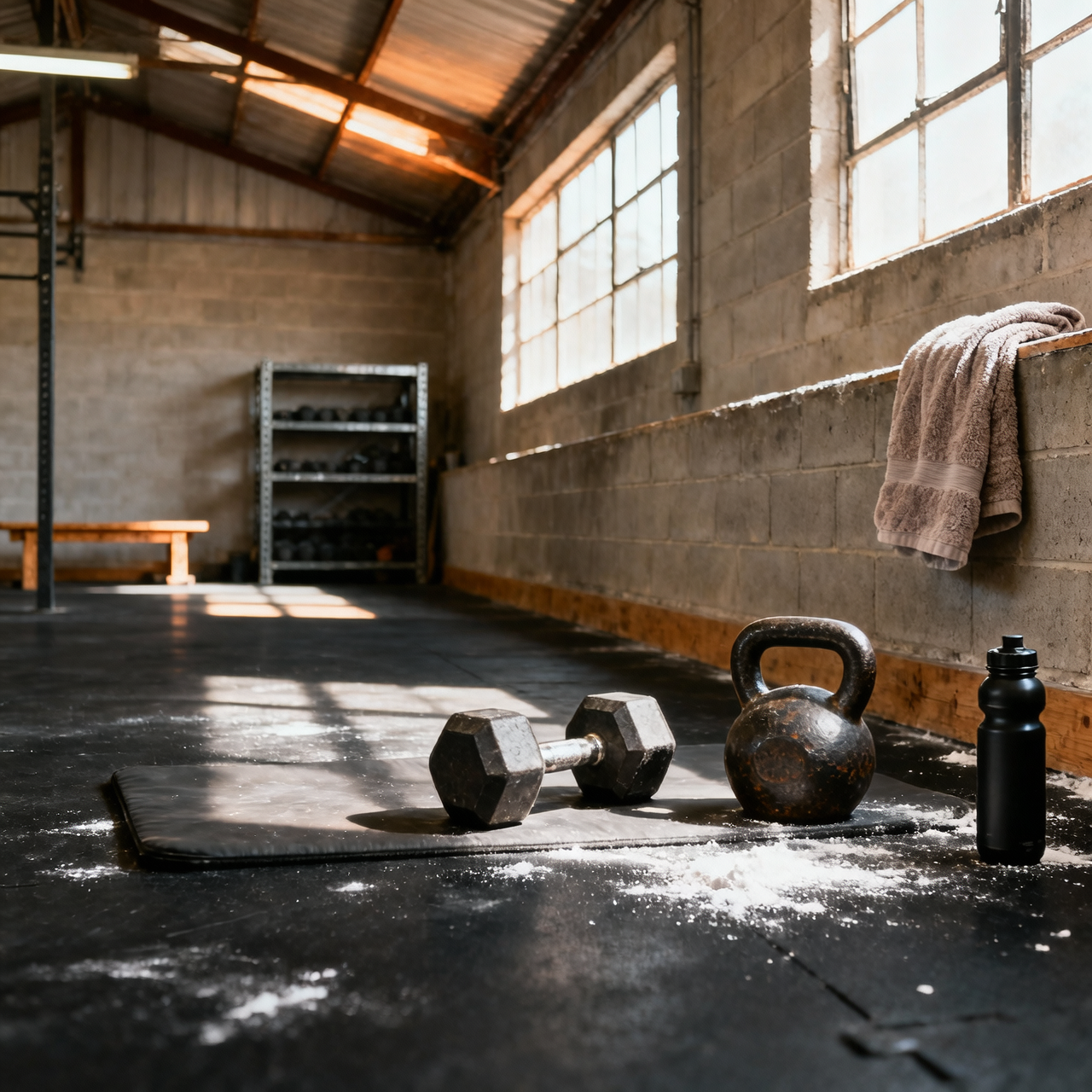
Farmer's Carry
farmer-s-carry
When I coach this, I want you to feel completely grounded. Good reps mean your shoulders stay packed down, your core locks like a steel brace, and your forearms burn in the best way possible. You’ll walk with a steady, rhythmic stride, entirely free of leaning. It’s never about speed; it’s about sustained tension. Every step feels deliberate, heavy yet controlled, leaving your whole body humming with resilient strength.
If you're new to this
Start lighter than you think you need. Your first priority is maintaining a completely straight spine and keeping your shoulders pulled down, not shrugged toward your ears. If you feel your lower back arching or your torso leaning forward, the weight is too heavy or your core has fatigued. True failure in this movement arrives when you can no longer keep your steps even, your shoulders start rolling forward, or your grip begins to slip despite maximal effort. Stop the set the moment your posture breaks or your breathing becomes shallow and panicked. Common compensations include hiking your shoulders up to your neck, taking tiny shuffling steps instead of full heel-to-toe strides, or letting the weights swing away from your body. Focus on walking as if you are balancing a glass of water on your head, moving with quiet control rather than rushing. Master the posture with a moderate load, and the strength will follow naturally.
Common mistakes
The most frequent error is allowing the shoulders to creep upward toward the ears, which transfers unnecessary strain to the neck and upper traps instead of letting the weight hang naturally from the lats. Another common issue is breaking the stride into frantic, uneven shuffles, which destabilizes the pelvis and forces the obliques to overcompensate rather than maintain steady tension. Many lifters also let the weights drift too far from the midline, creating a lever that pulls them off balance and compromises spinal alignment. Finally, rushing through the distance sacrifices the isometric hold that makes the movement effective, turning a structural builder into a sloppy walk. Slow down, keep the implements close to your thighs, and prioritize posture over pace.
Routine
- Sets
- 3
- Reps
- 30-40m
- Rest
- 90s
- Frequency
- 2x/week
Increase load by 5-10% or add 5 meters to the distance once strict posture and grip control are maintained throughout.
Muscles
- Traps
- Forearms
- Abs
- Glutes
- Quadriceps
Equipment
- Dumbbells
- Kettlebell
- 1
Plant your feet shoulder-width apart with toes angled slightly outward.
- 2
Hinge at the hips and bend the knees to lower into a controlled squat position.
- 3
Grip a dumbbell or kettlebell in each hand with palms facing inward toward the thighs.
- 4
Inhale deeply into the abdomen and tighten the entire core to stabilize the spine.
- 5
Drive through the midfoot to stand completely upright while keeping the weights close to the body.
- 6
Step forward with a short, deliberate stride and plant the leading foot firmly on the ground.
- 7
Exhale steadily as the trailing foot advances, maintaining a tall chest and packed shoulders.
- 8
Continue walking forward with controlled steps until reaching the designated endpoint.
- 9
Plant both feet shoulder-width apart, hinge at the hips, and lower the weights safely to the floor.
- 10
Release the handles, stand fully upright, and step away to complete the reset.