
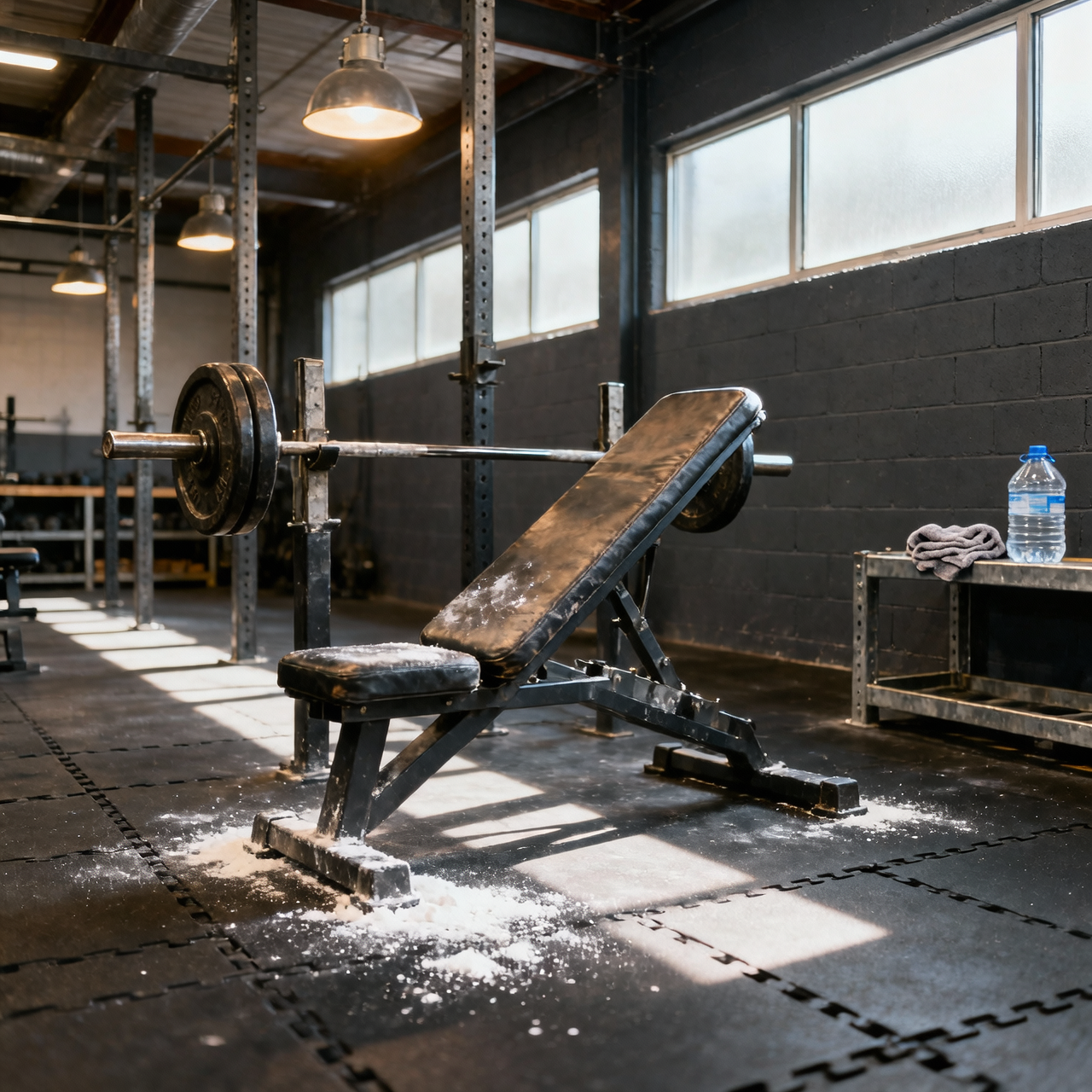
Incline Bench Press
incline-bench-press
When I settle onto the incline, the weight immediately loads my upper chest and front delts, creating a satisfying stretch across the collarbone. Every rep should feel controlled but explosive, like driving through a solid base. I keep my shoulder blades tucked as the bar traces a smooth arc. Good reps leave a steady, clean burn in the pecs, not the joints, making you feel grounded, powerful, and completely in control.
If you're new to this
When you are just starting, focus on building a solid foundation before chasing heavy weight. Keep your wrists stacked directly over your elbows throughout the entire range of motion to protect your joints. If the bar starts to drift toward your neck or your shoulders begin to roll forward, pause immediately and reset your scapular retraction. True muscular failure here feels like a gradual loss of power and a slight tremor in the pushing muscles, not a sharp joint pain or a collapsing chest. Stop the set the moment your form breaks or you cannot complete a rep without arching your lower back excessively or bouncing the bar off your torso. Beginners often compensate by shrugging their traps or letting their elbows flare out wide, which shifts stress away from the chest and into vulnerable shoulder joints. Breathe consistently, move deliberately, and trust that mastering lighter loads with perfect alignment will build far more lasting strength than struggling through sloppy heavy reps. You are building a resilient pushing pattern, and consistency will reward you quickly.
Common mistakes
Most lifters undermine their progress by setting the bench too steeply, which transforms the movement into a heavy overhead press and overloads the anterior deltoids. Another frequent error is bouncing the bar off the chest to exploit momentum, which robs the muscles of time under tension and places dangerous shear forces on the sternum and shoulders. Many also neglect scapular retraction, allowing their shoulders to protract and roll forward at the top of each press, effectively shutting off the chest and shifting the load to the rotator cuff. Finally, losing a tight lower body and letting the hips lift off the pad creates a false sense of strength while compromising spinal stability. Correcting these alignment and tempo issues immediately yields safer, more productive sets.
Routine
- Sets
- 3
- Reps
- 8-12
- Rest
- 90s
- Tempo
- 2-0-1-0
- Frequency
- 2-3x/week
Increase the load by 2.5 to 5 lbs once you can complete all sets at the top of the rep range with strict, controlled form.
Muscles
- Chest
- Shoulders
- Triceps
Equipment
- Bench
- Barbell
- 1
Set the bench to a 30 to 45-degree incline and lie back with your eyes aligned directly under the barbell.
- 2
Plant your feet flat on the floor shoulder-width apart and drive your shoulder blades together and down into the pad.
- 3
Grip the barbell just outside shoulder width with a secure, neutral wrist position.
- 4
Unrack the bar by straightening your arms and positioning it directly over your upper chest.
- 5
Inhale deeply, brace your core, and lower the bar under strict control until it lightly touches your upper chest.
- 6
Exhale forcefully while pressing the bar upward and slightly back until your elbows fully extend.
- 7
Guide the barbell back into the rack hooks, confirm it is fully seated, and carefully sit forward to complete the set.