
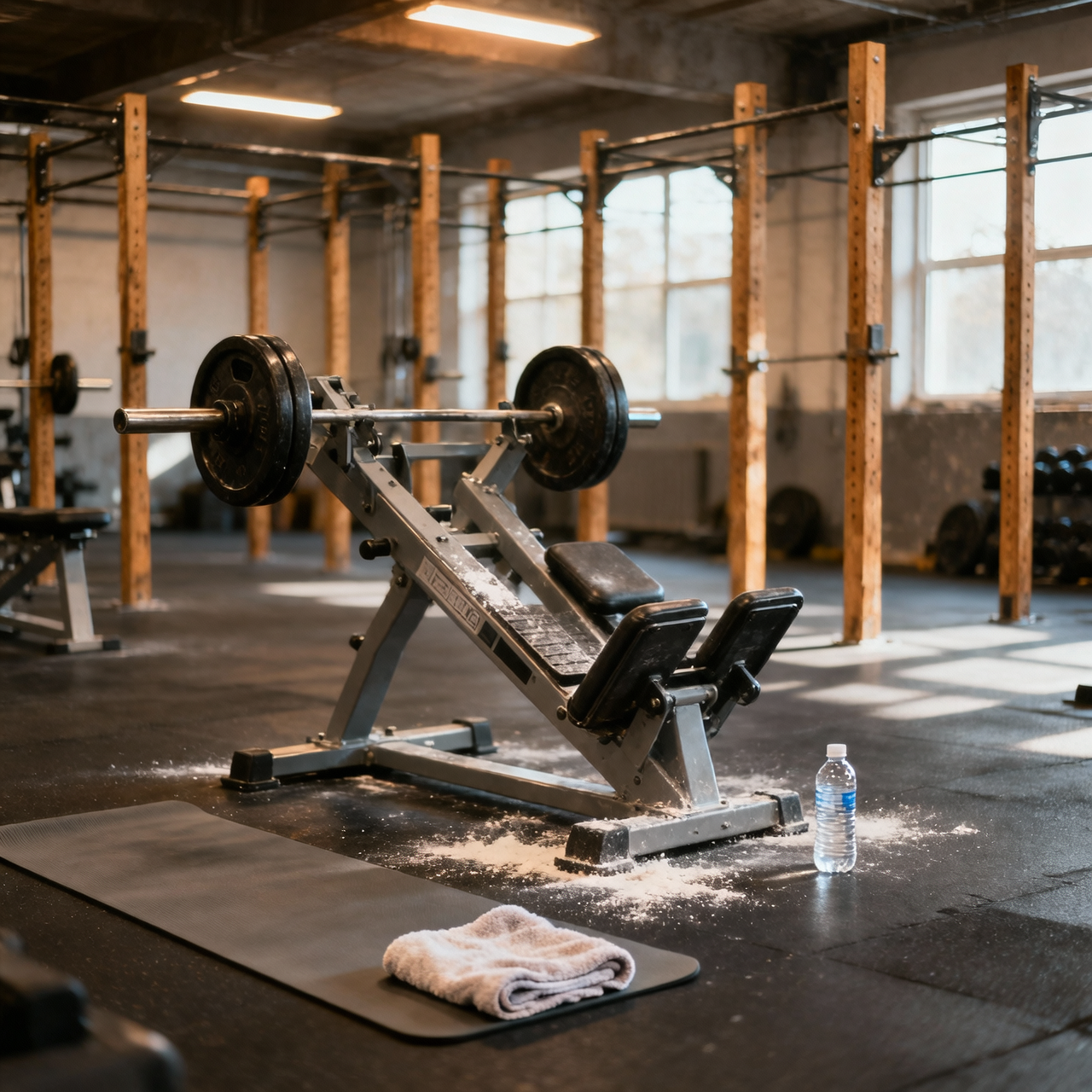
Leg Extension
leg-extension
I want you to feel the quads ignite with every controlled rep, not just move weight from point A to B. Good form means your hips stay pinned to the seat while your knees trace a smooth, deliberate arc. Focus on the deep burn at the top and the slow, resisting stretch on the way down. Breathe steadily, keep your core braced, and let the machine do exactly what it was built for.
If you're new to this
Start lighter than you think you need. The goal is mastering the hinge at your knees while keeping your torso completely still. As you lift, focus on squeezing your thighs rather than kicking the weight upward. You will feel a sharp, localized burn across the front of your legs as you approach failure. This is normal, but stop immediately if you experience sudden joint pain behind your kneecap or notice your hips lifting off the seat. Beginners often compensate by using momentum or arching their lower back to heave the final reps. Keep your glutes relaxed and let your quadriceps do all the work. If you cannot maintain a steady tempo or your form breaks down, reduce the load. Consistent, controlled reps will build resilient knee joints and sculpt your legs far faster than heavy, sloppy sets. Trust the process and prioritize precision over weight.
Common mistakes
Most lifters sabotage their progress by rushing through the movement and relying on momentum to swing the weight upward. This robs the quadriceps of tension and places unnecessary shear force on the knee joint. Another frequent error is hyperextending the knees at the peak of the lift, which locks the joint and shifts stress from muscle to ligament. Finally, many users fail to anchor their hips and upper back, allowing their torso to lift or twist as fatigue sets in. These compensations turn an isolation exercise into a risky, inefficient motion. Slow down, respect the machine’s pivot point, and maintain a rigid, seated posture throughout every repetition to maximize muscle engagement and protect your joints.
Routine
- Sets
- 3
- Reps
- 8-12
- Rest
- 60s
- Tempo
- 2-0-3-0
- Frequency
- 2-3x/week
Increase the selected weight by the smallest available increment once you can complete all sets with perfect control and a full second pause at the top.
Muscles
- Quadriceps
- Abs
Equipment
- Leg extension machine
- 1
Adjust the back pad so your knees align perfectly with the machine’s pivot point.
- 2
Sit firmly against the pad, grip the side handles, and place your lower legs behind the roller pad just above your ankles.
- 3
Brace your core and press your hips flat into the seat.
- 4
Exhale as you smoothly extend your legs until they are nearly straight, pausing briefly at the top.
- 5
Inhale slowly while lowering the weight with control, resisting gravity for a full three seconds.
- 6
Stop the descent just before the plates touch to maintain constant tension.
- 7
Reset your posture, keep your spine neutral, and repeat for the target repetitions.
- 8
Rack the weight securely and step away only after your breathing returns to normal.