
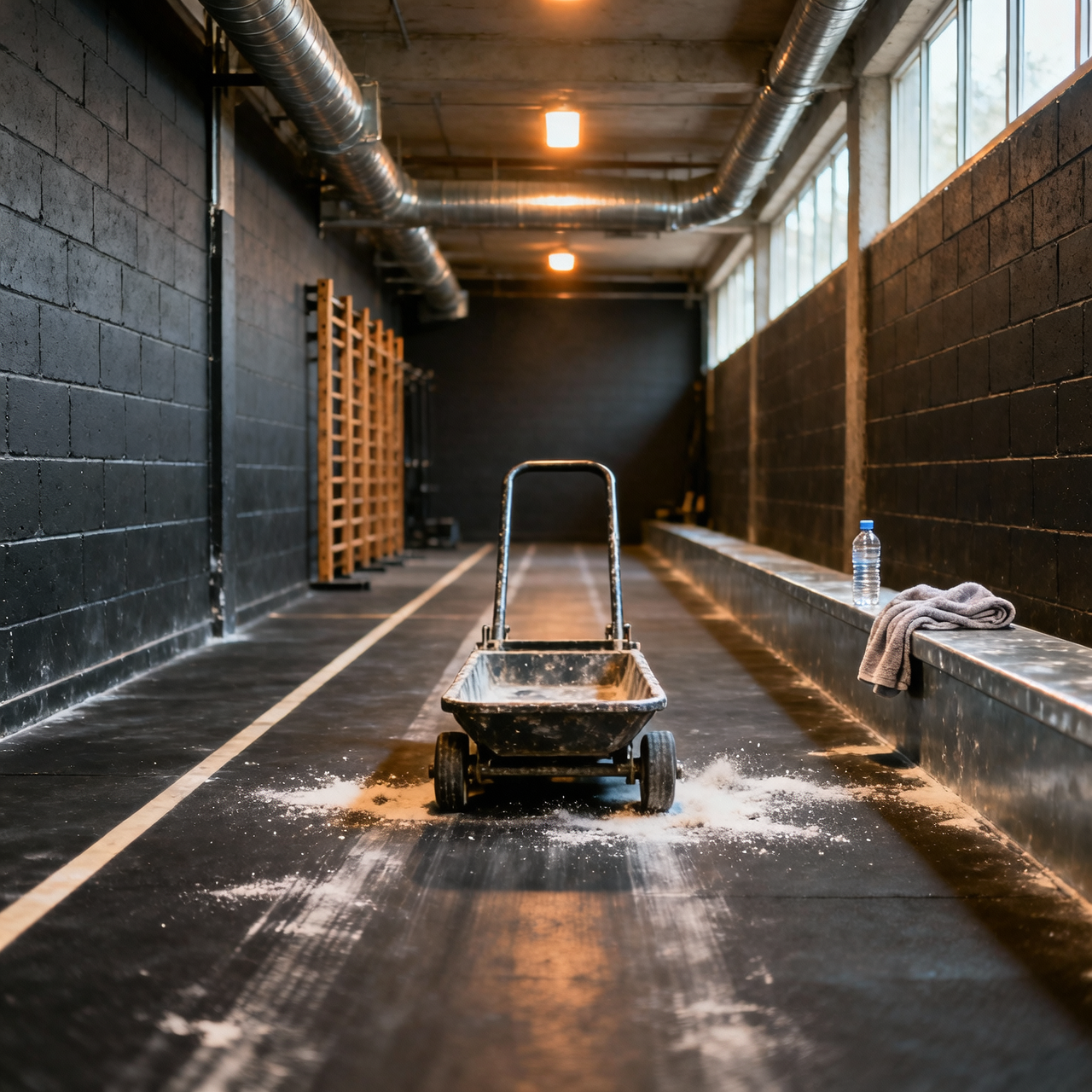
Sled Push
sled-push
When I coach a solid sled push, I want you to feel that relentless, rhythmic drive. Your legs will burn with each stride while your core stays tight and your posture tall. The load should challenge you without breaking form, letting you hold a steady pace instead of stalling. Sync your breath with your steps, lean into the resistance, and let that forward momentum carry you. It is raw, grounded work that leaves you spent but deeply satisfied.
If you're new to this
When you’re just starting out, prioritize posture over weight. Begin with an empty sled or very light plates to dial in your mechanics. Keep your chest up and your core braced as if preparing for a gentle punch to the stomach. If you feel your lower back rounding, your shoulders creeping toward your ears, or your knees caving inward, immediately reduce the load or shorten your stride. True muscular failure here presents as a heavy, burning fatigue in your legs and a noticeable drop in your driving rhythm, not joint strain or breathlessness that leaves you dizzy. Stop your set the moment your form begins to break down or your pace becomes erratic. It’s completely normal to feel your calves and hips working hard; that’s exactly what we want. Trust the process, take deliberate steps, and remember that consistency with lighter loads builds the foundation for powerful, injury-free conditioning later.
Common mistakes
Most lifters rush the setup and immediately compromise their posture by standing too upright, which shifts the workload away from the legs and into the lower back. Another frequent error is pushing primarily through the arms and shoulders rather than driving with the hips and quads, which quickly exhausts the upper body without building meaningful leg endurance. Many also take excessively long strides that cause the sled to stall or jerk, disrupting the smooth transfer of force. Finally, holding your breath throughout the movement creates dangerous intra-abdominal pressure spikes and leads to premature fatigue. Keep your spine neutral, drive from your hips, maintain short consistent steps, and breathe with every stride to maximize efficiency and safety.
Routine
- Sets
- 3
- Reps
- 30-40m
- Rest
- 60s
- Frequency
- 2-3x/week
Increase sled load or push distance by 5-10% weekly, or reduce rest intervals while maintaining pace.
Muscles
- Quadriceps
- Glutes
- Calves
- Abs
Equipment
- Sled
- 1
Position yourself directly behind the loaded sled with feet shoulder-width apart and toes slightly turned out.
- 2
Grip the upright handles at chest height while keeping a slight bend in the elbows.
- 3
Hinge forward at the hips until the torso angles at 45 degrees, maintaining a flat back and engaged core.
- 4
Take a deep breath in through the nose and brace the midsection before initiating movement.
- 5
Exhale forcefully while driving through the midfoot to take a short, powerful step forward.
- 6
Continue alternating leg pushes at a steady rhythm while keeping the chest up and shoulders relaxed.
- 7
Inhale briefly during the split second between strides, then exhale on each subsequent drive.
- 8
Maintain forward momentum until reaching the target distance, ensuring the knees stay aligned with the toes.
- 9
Decelerate gradually by shortening stride length and planting both feet firmly to halt the sled.
- 10
Release the handles, stand fully upright, and walk a wide arc around the sled to return to the start.