
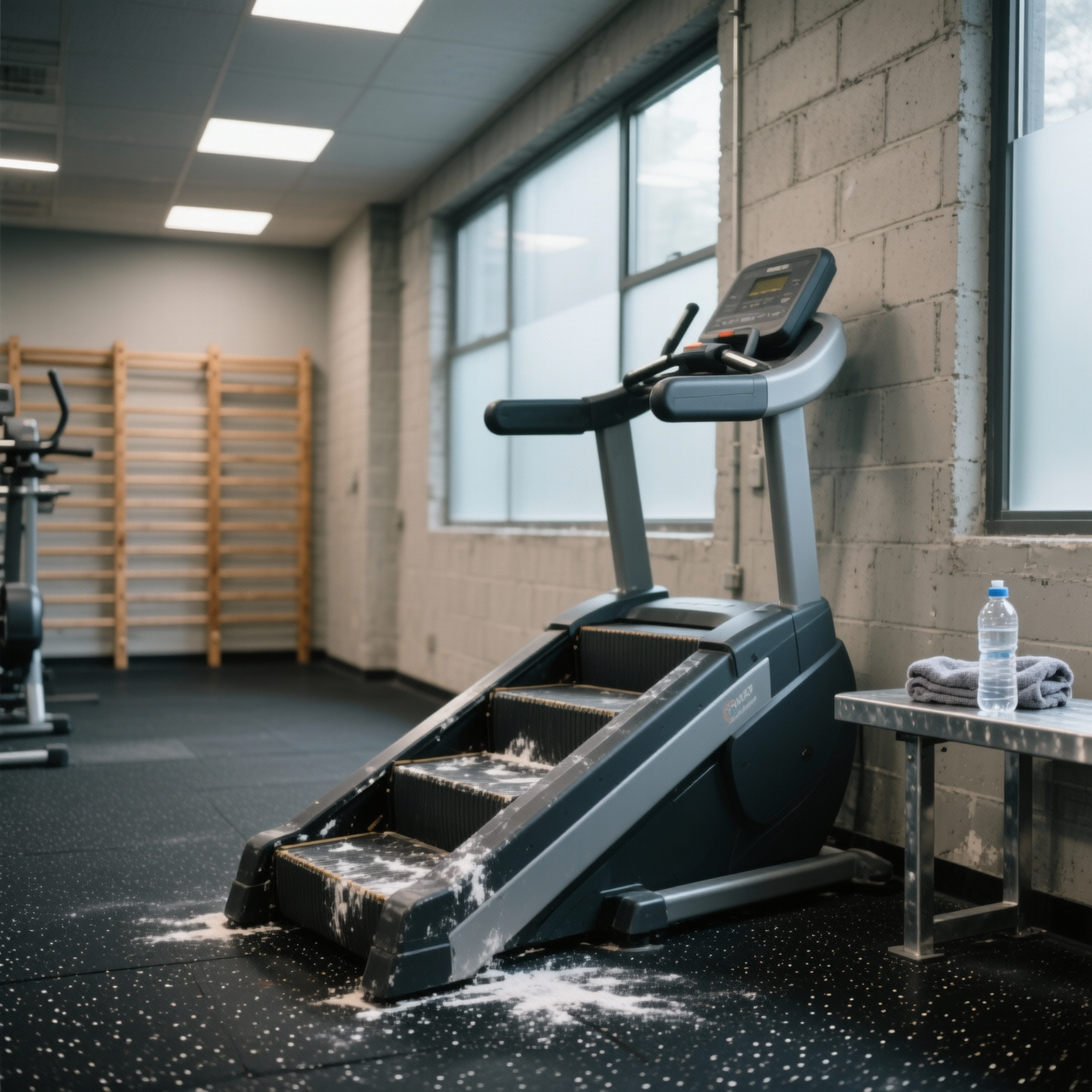
Stair Climber
stair-climber
When I step onto the machine, I immediately feel a steady, rhythmic burn building in my quads and glutes. Good reps on the stair climber feel like a relentless but controlled ascent, where every footfall is deliberate and grounded. I keep my chest lifted and my breathing deep, letting the continuous motion wash over me. There is a quiet satisfaction in maintaining that smooth, unbroken pace as my heart rate climbs and my lower body fires with purposeful endurance.
If you're new to this
When you first approach the machine, start at a low resistance and let your body learn the rhythm before chasing intensity. Keep your shoulders relaxed and your gaze forward, resisting the urge to hunch over the console or grip the handrails like a lifeline. True fatigue will arrive as a steady burn in your thighs and a rising breath, not as sharp joint pain or dizziness. If your knees start to cave inward or your lower back begins to arch excessively, slow down immediately and reset your posture. Beginners often compensate by leaning heavily on the handles or taking shallow, rapid steps that spike the heart rate prematurely. I want you to prioritize smooth, full-range steps over speed, allowing your glutes and quads to do the actual work. Stop the session if you feel lightheaded, experience chest tightness, or notice your form breaking down completely. Consistency beats intensity every single time. Build your stamina gradually, celebrate small victories in pacing, and remember that mastering your own rhythm is the foundation of lasting progress.
Common mistakes
Most users immediately sabotage their effort by leaning heavily on the handrails, which shifts the workload away from the legs and artificially lowers the cardiovascular demand. Another frequent error is taking shallow, rapid steps that bounce off the pedals, creating unnecessary impact on the knees and disrupting the natural stride cycle. Many also neglect their posture, allowing the shoulders to round forward and the lower back to overarch as fatigue sets in. Finally, holding the breath during intense intervals restricts oxygen delivery and causes premature exhaustion. Correcting these habits means lightening your grip, committing to full pedal depression, maintaining a tall chest, and pairing every step with deliberate, rhythmic breathing.
Routine
- Sets
- 1
- Reps
- 20-30 minutes
- Rest
- 0s
- Frequency
- 3-4x/week
Gradually increase session duration by 2-5 minutes or raise the machine resistance level by one step weekly.
Muscles
- Glutes
- Quadriceps
- Cardiovascular
- Calves
- Hamstrings
Equipment
- Stair climber
- 1
Step onto the machine pedals and grip the side handles lightly for balance.
- 2
Stand tall with shoulders back, core braced, and knees softly bent.
- 3
Press the start button and select a low resistance setting.
- 4
Begin stepping slowly, focusing on keeping your weight centered over your midfoot.
- 5
Inhale as the front foot lifts and the opposite pedal descends.
- 6
Exhale as you press firmly through the entire foot to fully depress the pedal without locking the knee.
- 7
Maintain a steady, controlled pace while keeping your chest lifted and avoiding forward leaning on the rails.
- 8
Step off the machine carefully when finished, release the handles, and take three slow, deep breaths to recover.