
Step-Up
step-up
I love how a crisp step-up makes my quads and glutes hum with steady, controlled tension. When I drive through the heel of my working leg, the movement feels grounded and powerful, never rushed. My core stays quietly engaged to keep my torso upright, while my trailing foot barely taps the surface for balance. Each rep leaves me feeling strong, stable, and ready to climb higher without compromising my alignment.
If you're new to this
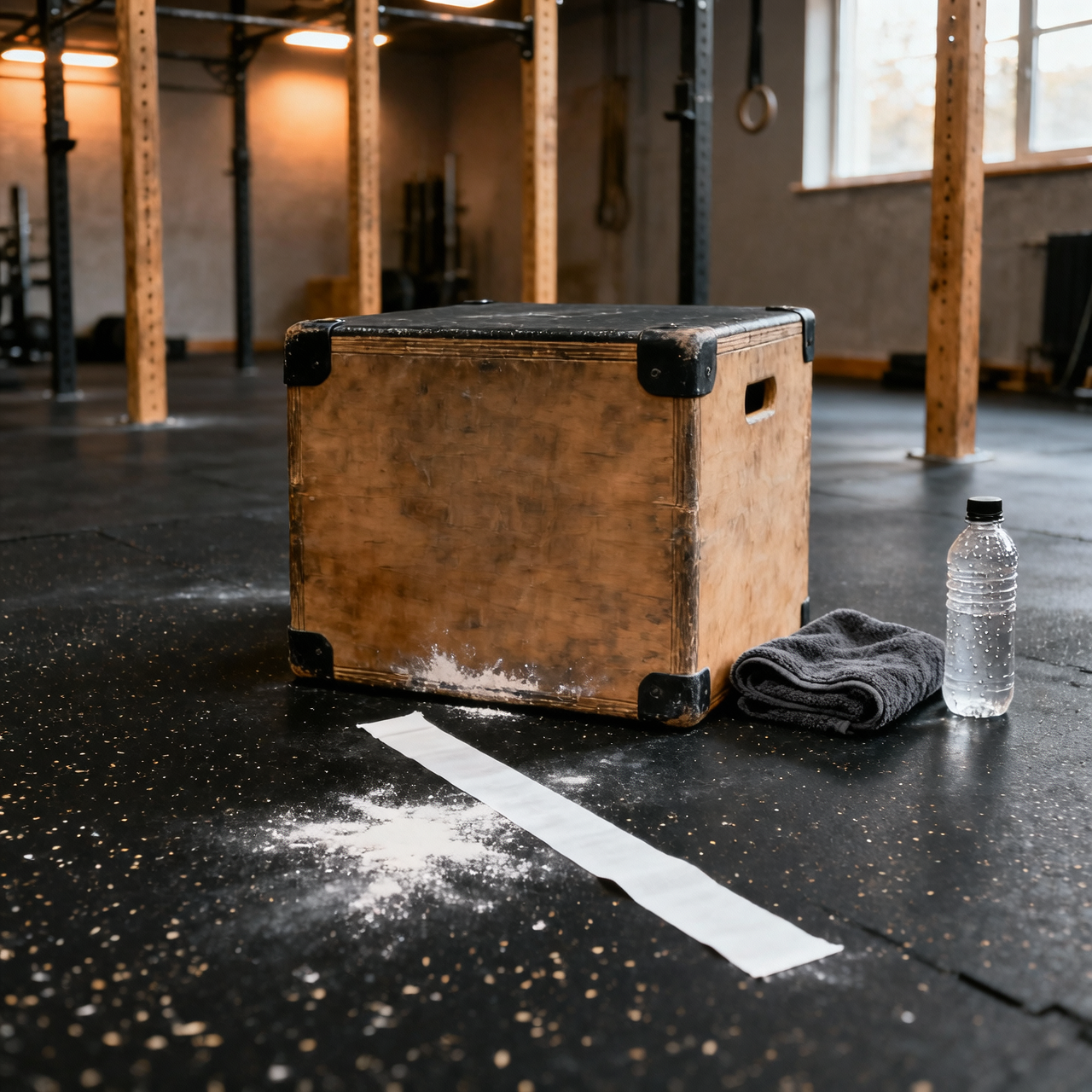
Start with a platform that sits at or just below knee height so you can maintain a vertical shin angle without straining your front knee. Place your entire foot on the surface before you initiate the movement, and consciously keep your weight centred over the midfoot and heel. If you feel your torso leaning excessively forward or your trailing leg kicking off to generate momentum, lower the box height or remove external weight entirely. Stop the set the moment your knee caves inward, your heel lifts off the surface, or your lower back begins to arch to compensate for fatigue. True muscle failure in this movement arrives as a heavy, shaking fatigue in the working leg, not as sharp joint pain or compromised balance. Take your time, prioritise clean mechanics over speed, and trust that mastering the basic step-up will build a resilient foundation for more demanding unilateral work.
Common mistakes
The most frequent error is using the trailing leg to push off the floor, which completely defeats the unilateral training stimulus and shifts tension away from the working quadriceps and glutes. Lifters also frequently step onto platforms that are too high, forcing the knee to travel excessively forward and placing unnecessary shear stress on the patellar tendon. Another common breakdown involves rushing the descent, allowing gravity to dictate the tempo and eliminating the eccentric control that builds joint resilience. Finally, many athletes allow the working knee to collapse inward during the drive, compromising hip stability and reducing force output. Keep the movement deliberate, choose an appropriate height, and maintain strict alignment to preserve the integrity of each repetition.
Routine
- Sets
- 3
- Reps
- 8-12
- Rest
- 90s
- Tempo
- 2-0-1-0
- Frequency
- 2-3x/week
Increase dumbbell weight once you can complete all sets at the top of the rep range with controlled form.
Muscles
- Quadriceps
- Glutes
- Hamstrings
- Calves
- Hip flexors
- Abs
Equipment
- Bodyweight
- 1
Stand facing a sturdy box with feet hip-width apart and exhale to brace the core.
- 2
Place the entire leading foot flat on the center of the platform.
- 3
Inhale deeply while keeping the chest lifted and spine neutral.
- 4
Drive through the heel and midfoot of the planted leg to lift the body upward.
- 5
Fully extend the hip and knee at the top while keeping the trailing foot hovering.
- 6
Exhale steadily to stabilize the torso and maintain balance.
- 7
Inhale slowly and lower the trailing foot back to the floor with strict control.
- 8
Step the leading foot down to meet the other foot and return to a neutral stance.
- 9
Square the hips, reset the posture, and exhale completely before repeating.