
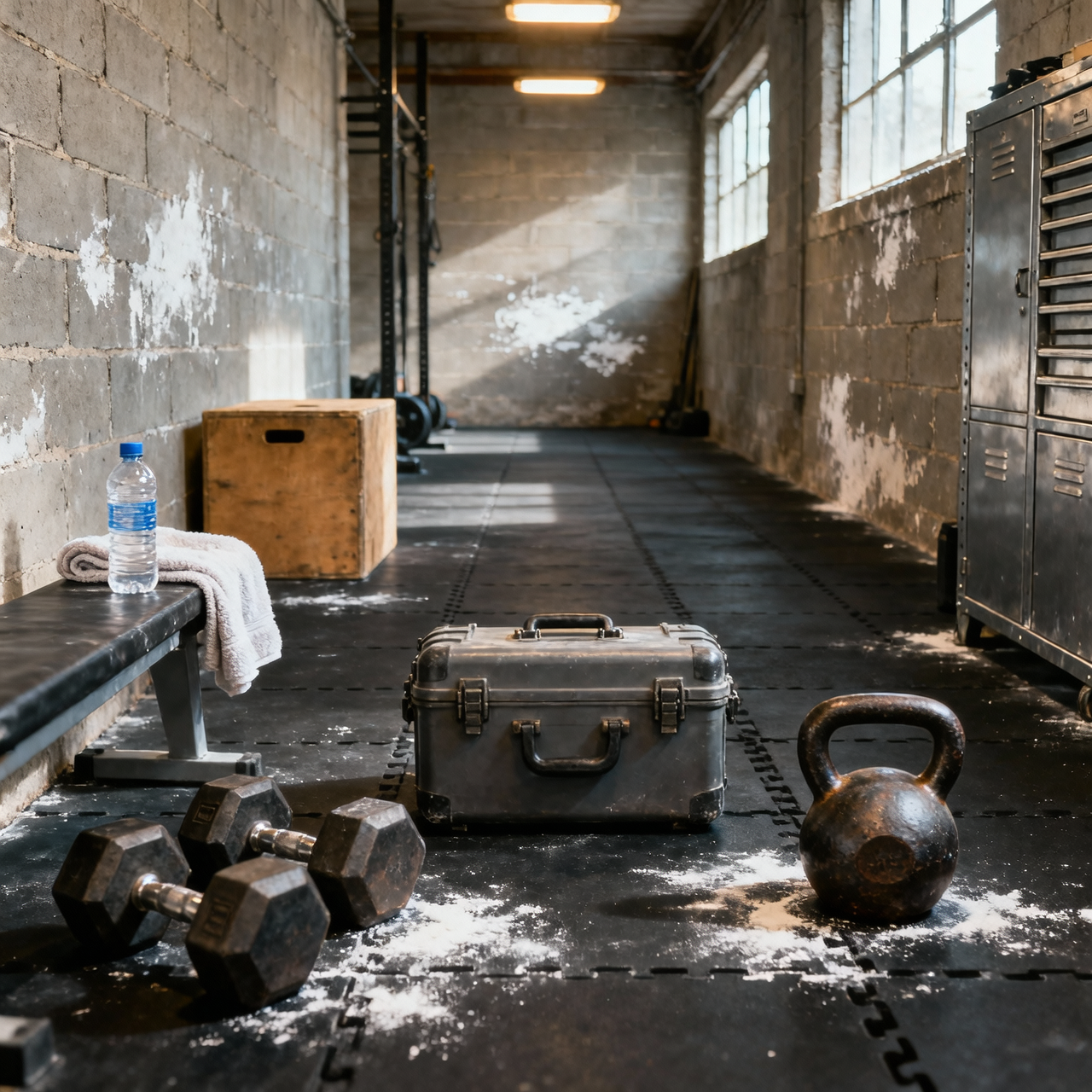
Suitcase Carry
suitcase-carry
When I pick up a heavy kettlebell or dumbbell in one hand, a proper set feels like a quiet battle between tension and control. My core locks in automatically, my shoulders stay level, and every step translates into grounded, deliberate momentum. I’m not just hauling weight; I’m teaching my entire midline to resist rotation while moving with calm, unwavering posture. That steady, anti-rotational burn is exactly where strength lives.
If you're new to this
Start with a moderate weight that allows you to maintain flawless posture for the entire distance. Focus on keeping your ribs stacked directly over your hips, and imagine a string pulling the crown of your head toward the ceiling. If you feel your torso tilting toward the opposite side or your lower back arching, the load is too heavy and it is time to drop down. Grip failure will present as a slipping handle or forearm cramping, while core fatigue will feel like a gradual loss of that tall, braced posture. Stop immediately if you notice your shoulders hiking toward your ears or your steps becoming uneven. Beginners often compensate by swinging the weight like a pendulum or leaning heavily into the loaded side to make it feel lighter. Instead, keep the weight close to your hip, walk slowly, and prioritize a rigid, symmetrical frame over speed or distance. Master the anti-lateral flexion pattern first, and the heavier carries will follow naturally.
Common mistakes
Lifters frequently allow the weight to pull them into a lateral lean, surrendering to gravity instead of actively fighting it with their core. Another frequent error is letting the working shoulder shrug upward, which shifts tension away from the lats and into the neck. Many also take overly long, uncontrolled strides that cause the torso to bounce and compromise spinal alignment. Finally, holding your breath throughout the walk creates unnecessary intra-abdominal pressure spikes and leads to early fatigue. Keep your steps short, your shoulders packed down, and your breathing rhythmic to maintain control.
Routine
- Sets
- 3
- Reps
- 30-45 seconds per side
- Rest
- 90s
- Frequency
- 2-3x/week
Increase load by 5-10 lbs or add 10 meters per side while maintaining strict upright posture and anti-lateral core tension.
Muscles
- Obliques
- Forearms
- Abs
- Glutes
Equipment
- Dumbbells
- Kettlebell
- 1
Place a dumbbell or kettlebell on the floor beside one foot.
- 2
Stand with feet shoulder-width apart and toes pointed slightly outward.
- 3
Hinge at the hips and bend the knees to lower the torso toward the weight.
- 4
Grip the handle firmly with one hand, keeping the wrist straight and elbow tucked.
- 5
Inhale deeply, brace the core, and drive through the heels to stand tall while keeping the weight close to the thigh.
- 6
Walk forward with short, controlled steps, exhaling steadily to resist lateral bending and maintain level shoulders.
- 7
Keep the gaze forward and the ribcage down to prevent torso rotation throughout the movement.
- 8
Plant both feet firmly, inhale to reset posture, and exhale while hinging the hips to lower the weight back to the floor.
- 9
Release the grip completely, stand upright, and switch sides to repeat the sequence.