
Wall Slides
wall-slides
I love how wall slides gently coax my shoulders into their natural range without forcing anything. When I move well, each rep feels like a smooth glide where my back stays flush against the wall. I notice a satisfying stretch across my chest, followed by light activation in my upper back. It is never painful, just a steady, mindful release that leaves my posture feeling taller, more open, and completely ready for whatever comes next.
If you're new to this
If you are new to this movement, start with a smaller range of motion and focus on maintaining wall contact above all else. Your elbows and wrists will naturally want to drift forward, which is normal when thoracic mobility is limited. Instead of forcing your hands higher, keep your ribcage glued down and slide only as far as you can without your lower back arching. You will know you have reached a safe stopping point when your shoulders hike toward your ears or your neck tenses. At that moment, pause and slowly return down. Common compensations include flaring your ribs, shrugging your traps, or lifting your head to gain height. Keep your chin slightly tucked and your core gently engaged. Progress will feel gradual, but every controlled slide actively rewires your posture. Trust the process, prioritize quality over range, and your mobility will steadily expand.
Common mistakes
The most frequent error is allowing the lower back to hyperextend off the wall as the arms travel upward. This instantly shifts the workload from your upper back to your lumbar spine and defeats the purpose of thoracic mobilization. Another common pitfall is breaking contact with the wrists or elbows, which turns a controlled mobility drill into a loose, unstructured reach. Many practitioners also rush through the tempo, using momentum to slide up quickly instead of maintaining deliberate, muscle-driven control. Finally, shrugging the shoulders toward the ears during the ascent recruits the upper traps instead of the intended mid-back stabilizers. Keep your movements slow, maintain full surface contact, and let your shoulder blades guide the motion rather than your arms.
Routine
- Sets
- 3
- Reps
- 10-15
- Rest
- 30s
- Tempo
- 3-0-2-0
- Frequency
- 3-5x/week
Increase range of motion while maintaining full spinal contact, or add light band resistance for greater tension.
Muscles
- Upper back
- Shoulders
- Traps
Equipment
- Bodyweight
- 1
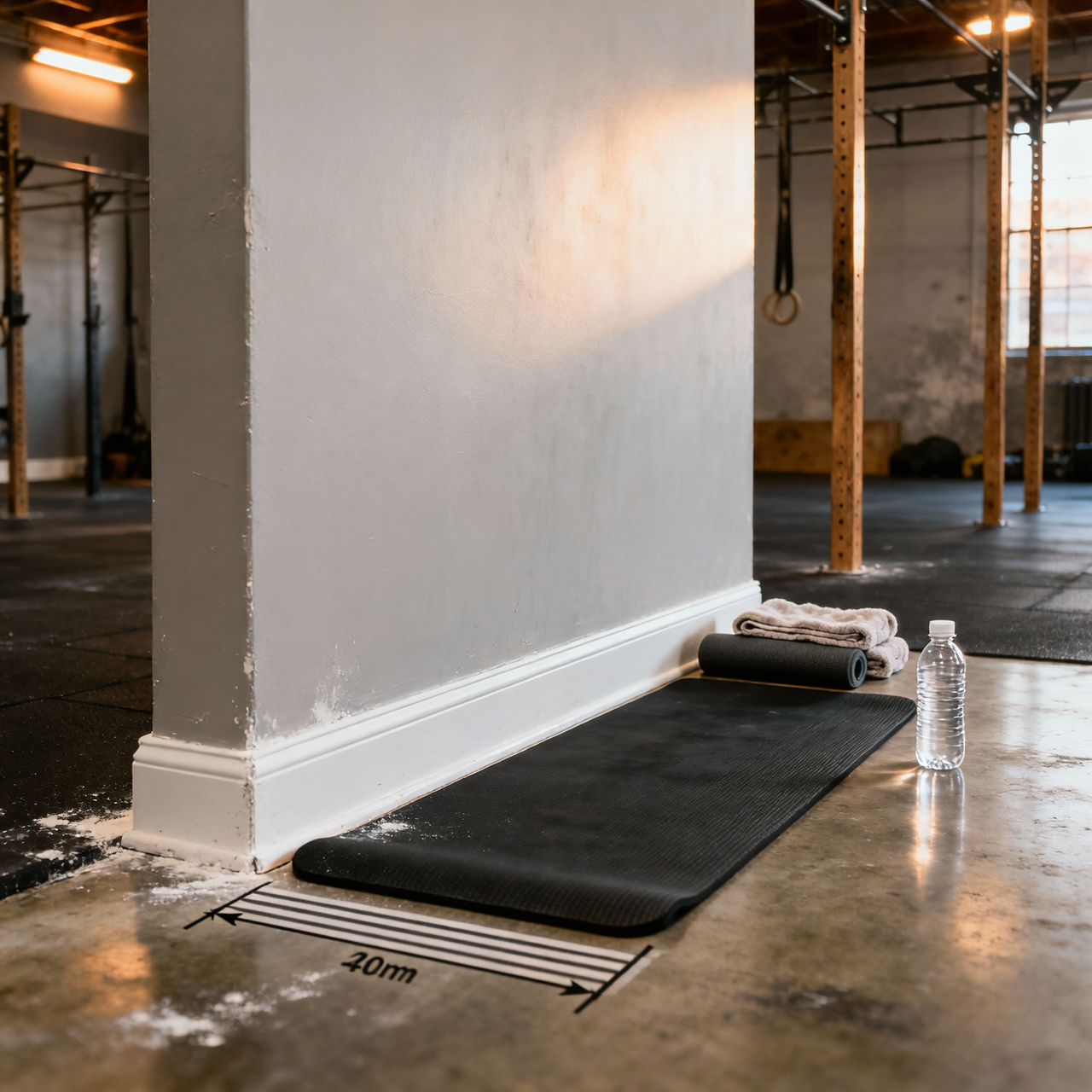
Stand with your back flat against a wall, heels about six inches from the baseboard.
- 2
Plant your feet shoulder-width apart with toes pointing slightly outward.
- 3
Press your entire spine and the back of your head firmly into the wall.
- 4
Bend your elbows to ninety degrees and raise your arms into a goalpost shape, keeping your elbows and wrists touching the wall.
- 5
Inhale deeply through your nose while bracing your core to prevent your ribs from flaring.
- 6
Exhale slowly through your mouth as you slide your forearms and hands straight up the wall.
- 7
Stop the upward movement the instant your lower back starts to lift away from the wall.
- 8
Hold the top position for two seconds while keeping your shoulders relaxed and away from your ears.
- 9
Inhale as you slowly reverse the motion, sliding your arms back down to the ninety-degree starting position.
- 10
Step away from the wall, shake out your arms, and reset your stance before the next repetition.