
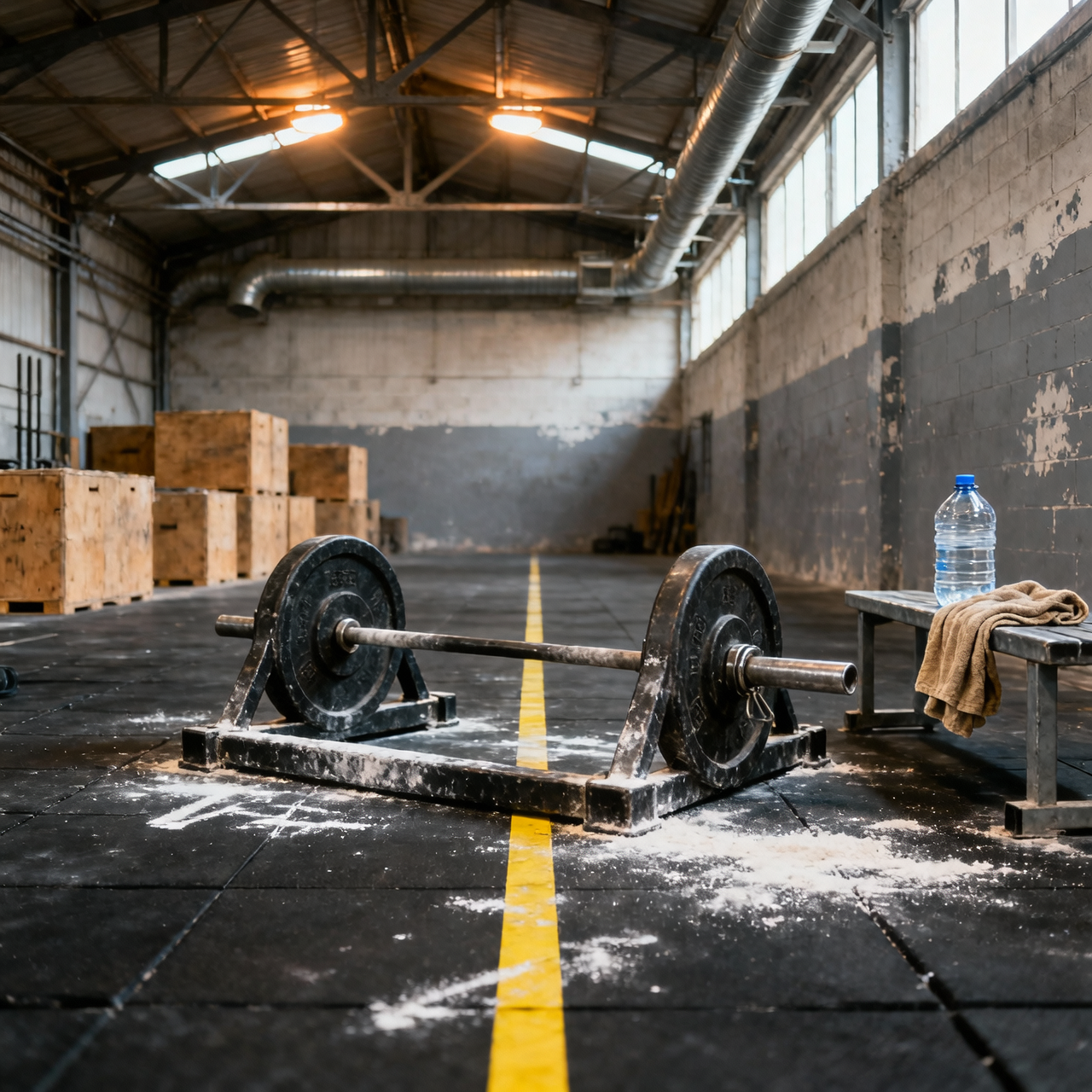
Yoke Walk
yoke-walk
When I step under the heavy steel frame, I feel grounded and fiercely focused. Good reps hum with steady, controlled tension across my upper back, core, and legs. Each stride feels deliberate, my breath syncing with the rhythmic thud of the plates against the floor. It’s raw, unyielding power, but I never fight the weight. I guide it forward with quiet, unbroken confidence.
If you're new to this
Start light to master the rhythm before adding plates. Focus on keeping your chest proud and your gaze fixed on a point at eye level; looking down will collapse your spine and shift the load forward. Step quickly but stay grounded, avoiding long, bounding strides that waste energy and destabilize the frame. When the weight truly challenges you, your legs will burn, your traps will ache, and your breathing will grow shallow. Stop immediately if your spine rounds, your knees buckle inward, or you feel sharp pain in your lower back or shoulders. A common compensation is leaning too far forward or hiking one shoulder to compensate for an uneven load, which strains the obliques and neck. Trust your brace, keep your steps short and rapid, and remember that consistency beats ego. You will build the stability and grit needed for heavier loads by treating every rep as a practice in structural integrity.
Common mistakes
Lifters often take overly long, exaggerated strides that create vertical oscillation, forcing the yoke to bounce and drain stability. Many also round the upper back or tuck the chin, which shifts the center of gravity forward and places dangerous shear forces on the lumbar spine. Rushing the setup by failing to secure a tight brace before lifting leads to immediate core collapse once the walk begins. Finally, carrying the load unevenly across one shoulder or allowing the feet to cross over each other creates lateral sway that compromises balance and accelerates fatigue.
Routine
- Sets
- 3
- Reps
- 3-4 trips of 20-30m
- Rest
- 150s
- Frequency
- 1-2x/week
Increase yoke load by 2.5-5kg once you can complete all trips with upright posture and consistent stride length.
Muscles
- Quadriceps
- Glutes
- Traps
- Abs
- Lower back
- Calves
Equipment
- Yoke
- 1
Position yourself directly under the center of the loaded yoke crossbar with feet shoulder-width apart and toes slightly pointed out.
- 2
Step forward to rest the crossbar securely across your upper traps and grip the vertical handles firmly.
- 3
Brace your abdominal wall, inhale deeply into your belly, and drive through your midfoot to lift the yoke off the supports.
- 4
Step backward until fully clear of the rack, plant both feet, and exhale forcefully to lock your torso in position.
- 5
Take a short, controlled step forward with your lead leg while maintaining a tall chest and neutral spine.
- 6
Bring the trailing foot to meet the lead foot, inhale briefly through the nose, and immediately plant the next step.
- 7
Continue alternating legs with quick, deliberate strides, exhaling on each foot strike and inhaling during the brief weight transfer.
- 8
Keep your gaze fixed forward and shoulders packed down to prevent upper back rounding as you approach the target distance.
- 9
Bend at the knees and hips to lower the yoke toward the ground or rack while exhaling steadily to maintain core tension.
- 10
Release the handles once the crossbar is fully supported, step backward to clear the equipment, and stand upright to complete the set.